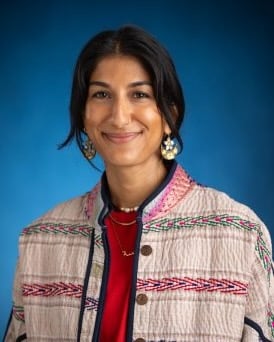
Nafeesa Andrabi is an Assistant Professor of Sociology, a Research Assistant Professor in the Population Studies Center at the Institute for Social Research, and a Scholar with the Michigan Program for Advancing Cultural Transformation (M-PACT) in the Biomedical Sciences at University of Michigan. She is a sociologist and social demographer who primarily examines how and… Continue reading Andrabi,Nafeesa
Research Theme: Population Health Lifecourse and Biosocial Processes
Aging, Major Life Transitions, and Suicide Risk

Briana Mezuk, Sarah Burgard Suicide is the 10th leading cause of death in the US, with over 42,000 cases annually. There is an urgent need to identify modifiable risk factors that can inform public health prevention strategies. This research seeks to leverage and integrate several existing datasets to support novel secondary analyses aimed at identifying… Continue reading Aging, Major Life Transitions, and Suicide Risk
Long-Term Mobility and Wellbeing of New Orleans Residents after Hurricane Katrina

Narayan Sastry Two key tasks will be undertaken at the University of Michigan as part of this project. First, we will collaborate with the Elizabeth Fussell and other staff at Brown University as well as with staff at the U.S. Census Bureau to design and implement the analysis of linked data from the Decennial Census,… Continue reading Long-Term Mobility and Wellbeing of New Orleans Residents after Hurricane Katrina
Improving Learning: Developing Measures of Accountability and Evaluating their Association with Students’ Gains in Achievement in Nepal

Dirgha Ghimire This project aims to develop and validate measures of accountability to be shared with the Nepal Ministry of Education (MOE), local stakeholders and scientific communities, and to use those measures in an analysis of the determinants of accountability and its association with students’ gains in achievement. The proposed study will build on the… Continue reading Improving Learning: Developing Measures of Accountability and Evaluating their Association with Students’ Gains in Achievement in Nepal
Economic distress and growing educational disparities in life expectancy: Weathering, high effort coping, and despair

Arline T. Geronimus Researchers have used a variety of data sources and methodologies to independently document two disturbing trends: a halt to universal gains in life expectancy (LE) across US subpopulations, and a subsequent rise in educational inequality in LE since 1990—both of which take us further from achieving the high-priority national public health objective… Continue reading Economic distress and growing educational disparities in life expectancy: Weathering, high effort coping, and despair
Understanding the Connections among Genes, Environment, Family Processes, and Mental Health

William G. Axinn Psychiatric disorders are the leading source of disability worldwide and affect 53% of the U.S. population. In addition to the individual suffering they entail, disabilities associated with these disorders may have substantial consequences for family and health outcomes. This includes long-term consequences for family formation and dissolution behaviors. Dissecting the relationship among… Continue reading Understanding the Connections among Genes, Environment, Family Processes, and Mental Health
Scientific and Technical Core

Brady T. West A sub-project of Michigan Research Infrastructure for Population Sciences– The objective of the Scientific and Technical Core (STC) is to advance the overarching objective of this P2C proposal – to design, create, and use new data to advance population science – by enhancing methods used for all three activities, and by providing… Continue reading Scientific and Technical Core
Effects of Financial Sanctions in the Criminal Justice System

Michael Mueller-Smith The use of legal financial obligations, colloquially referred to as financial sanctions, imposed on individuals who come into contact with the criminal justice system is widespread and growing in the U.S. criminal justice system. These fees and fines could generate serious social and economic consequences, particularly among low-income populations who are unable to pay… Continue reading Effects of Financial Sanctions in the Criminal Justice System
A New Population-Scale Approach for the Study of Psychological Stress in the Transition to Adulthood

This project pioneers a new protocol for self-collection of hair samples for large, population representative samples of individuals. Hair will be used to assess cortisol levels (a biomarker for psychological stress) among a large cohort of those experiencing the transition to adulthood. Panel data will be used to establish selection bias in the success of… Continue reading A New Population-Scale Approach for the Study of Psychological Stress in the Transition to Adulthood
Health Decision-Making in the Aftermath of a Disaster: Evidence from Cyclone Idai in Mozambique

Dean Yang, Tanya Rosenblat, James Riddell IV How do disasters affect individual decision-making about important health behaviors? Can public health interventions reduce disaster-induced deterioration of such decision-making? We explore these questions in the context of Cyclone Idai in Mozambique. We have a research team in the area struck by the cyclone, that was about to… Continue reading Health Decision-Making in the Aftermath of a Disaster: Evidence from Cyclone Idai in Mozambique