
The MCUAAAR hosted webinar for HBCU partners Researchers often start with the arduous task of gathering data, but tapping into high-quality data sets that have already been collected can be a fast and invaluable way to survey the field, explore topics, and test ideas. By stewarding secondary data, ICPSR serves the purpose of providing social… Continue reading How to Use ICPSR and NACDA
Project: RCGD
RCGD to Explore Political Polarization

The U.S. is experiencing unprecedented levels of political polarization, especially in terms of affective polarization, or feelings of dislike and distrust towards members of the opposing political party. This winter, the Research Center for Group Dynamics at the Institute for Social Research is hosting an interdisciplinary Winter Seminar Series, free and open to the public,… Continue reading RCGD to Explore Political Polarization
David Dunning, on the Dunning-Kruger Effect

“The beauty and the terror of the internet,” social psychologist David Dunning tells interviewer David Edmonds in this Social Science Bites podcast, “is that there’s a lot of terrific information, but there’s also a lot of misinformation and sometimes outright fraud. People often don’t have the wherewithal to distinguish.” David Dunning, a professor of psychology at… Continue reading David Dunning, on the Dunning-Kruger Effect
ISR, partners conduct first national study of public libraries’ Black History Month programming

The University of Michigan Institute for Social Research (ISR)– in partnership with the Black Caucus of the American Library Association (BCALA) and the Public Library Association (PLA)– is embarking on a three-year project that will be the first systematic, national study to assess the content, scope, and factors influencing offerings of Black History Month programming… Continue reading ISR, partners conduct first national study of public libraries’ Black History Month programming
Meet Kristine Ajrouch
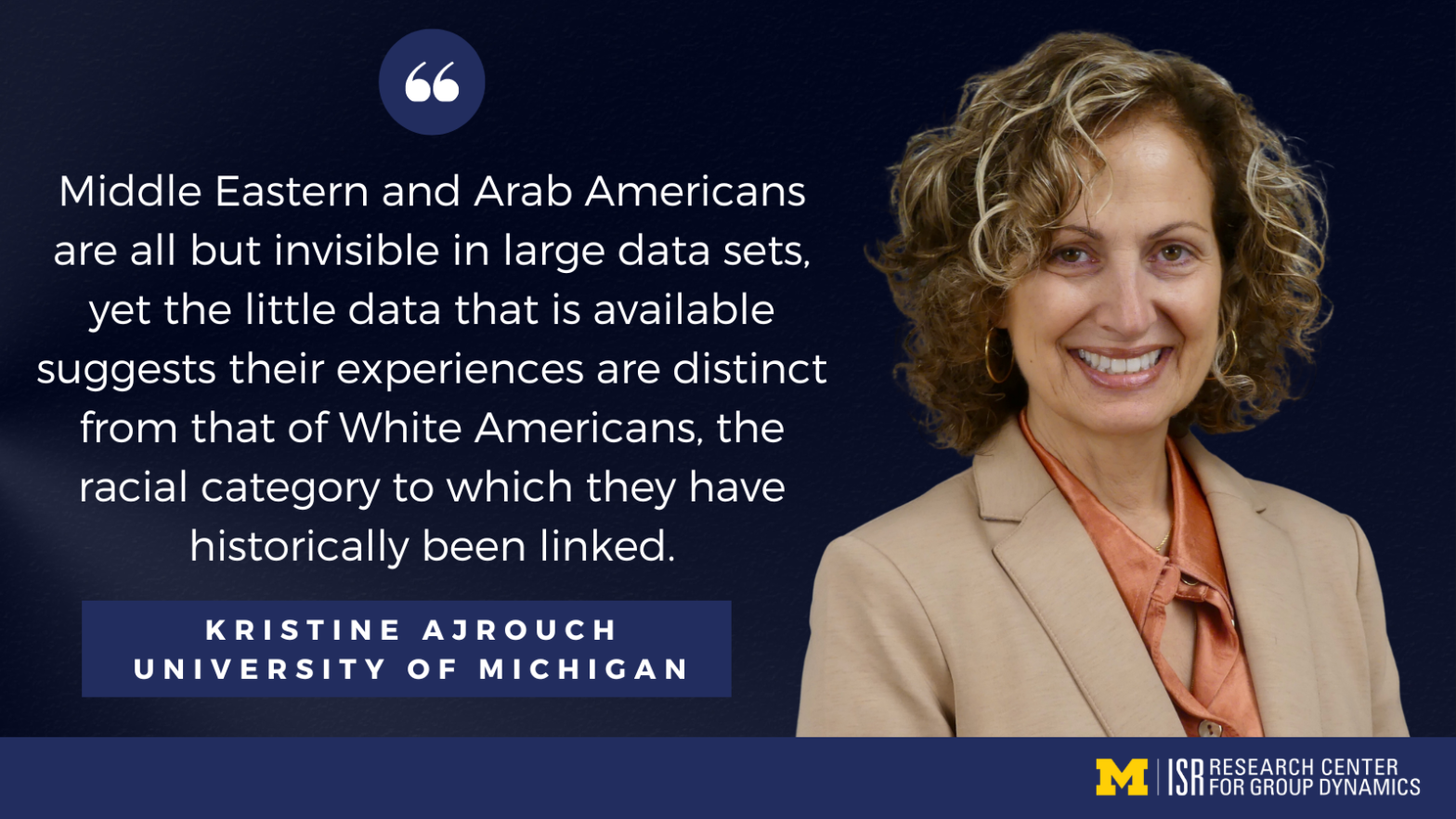
MCCFAD Co-Director joins RCGD as research professor, with new Healthy Aging grant addressing dementia-related stigma among MENA-Americans Growing up in an immigrant family, Kristine Ajrouch (Ahzh-ROOSH) has always been intrigued by people who immigrated – how they learned to think and talk in a new language. A native of Detroit, her maternal grandparents left Lebanon… Continue reading Meet Kristine Ajrouch
Motivating experts to contribute to open content

ANN ARBOR—Getting experts to contribute to open content, such as Wikipedia, is not an easy task as experts often have high demands on their time. But one way to increase expert contributions is to understand what motivates them to contribute, a University of Michigan study shows. The study, led by U-M behavioral and experimental economist Yan Chen, finds… Continue reading Motivating experts to contribute to open content
Alzheimer’s and Arab Americans: More research needed

EXPERT Q&A ANN ARBOR—Middle Eastern and Arab American populations may have higher rates of Alzheimer’s disease and related cognitive impairments, but researchers don’t exactly know because these populations aren’t identifiable in national datasets. That’s because historically, Middle Eastern and Arab Americans populations haven’t been included as a distinct ethnic group in the U.S. Census, making… Continue reading Alzheimer’s and Arab Americans: More research needed
ISR affiliate Ethan Kross named AAAS fellow

Contact: Jon Meerdink ([email protected]) ANN ARBOR — Ethan Kross, Ph.D., a faculty associate at the Institute for Social Research’s Research Center for Group Dynamics (RCGD), has been named a 2023 fellow by the American Association for the Advancement of Science (AAAS). Kross is one of twelve University of Michigan faculty and staff members to receive… Continue reading ISR affiliate Ethan Kross named AAAS fellow
Germ aversion impacted 2020 election voting behavior

Voters opted to pick candidates in 2020 by mail-in ballots, avoiding poll sites due to COVID-19 concerns rather than because of political party efforts to promote specific voting methods, according to a new University of Michigan study. Researchers tested attitudes toward using in-person, early and distanced voting in an experiment during summer 2020 and then… Continue reading Germ aversion impacted 2020 election voting behavior
Connect with The Abstract, a new podcast from ISR

Contact: Jon Meerdink ([email protected]) ANN ARBOR — The University of Michigan’s Institute for Social Research has launched a new podcast. “The Abstract,” a brief look at presentations and talks given by social researchers at ISR, released its first three episodes this week. Intended to highlight lectures given through ISR’s Insights Speaker Series and elsewhere, episodes… Continue reading Connect with The Abstract, a new podcast from ISR