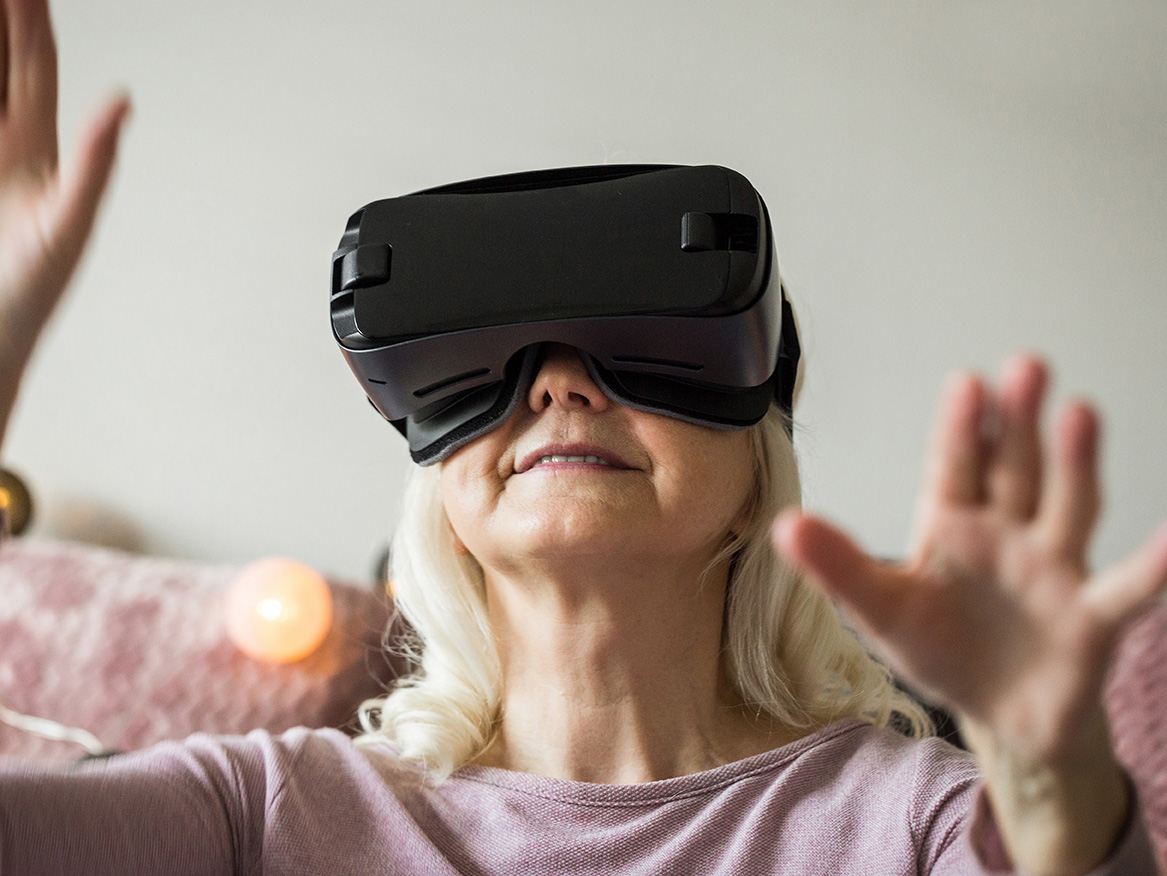
Nearly one-third of older adults (age 65+) in the United States are aging alone. Those who experience social isolation are significantly more likely to develop Alzheimer’s disease and related dementias (ADRD). Virtual reality (VR) is gaining recognition as a means to promote cognitive health as well as a means to connect with our social network. There is a need to understand the capabilities of VR to address cognitive health through the pathway of social connection among older adult.
- Conduct a series of semi-structured interviews to understand the social convoys and primary uses of technology for older adults living alone and identify perceptions and needs related to VR, cognitive health, independent living.
- Conduct a series of feasibility and acceptability observational studies using VR headset technology on social, physical, and cognitive outcomes. To achieve this aim we will conduct a series of feasibility and acceptability of methods, protocol, and logistical issues related to social head-mounted VR use to mitigate social isolation and promote cognitive health.
- Post-test semi-structured interviews to promote co-creation of protocol and informational materials for the implementation of Social VR technology for older adults’ cognitive health.
The short-term impact of this research will be to collect feasibility and acceptability data to inform the submission of an NIH R21 to collect pilot data and eventually an NIH R01 to test the efficacy and effectiveness of a social VR-based intervention to promote cognitive health among older adults living alone. The long-term impact of this research will be to develop novel and innovative interventions to reduce the incidence of ADRD and promote independent living through VR enabled social interaction among older adults living alone.