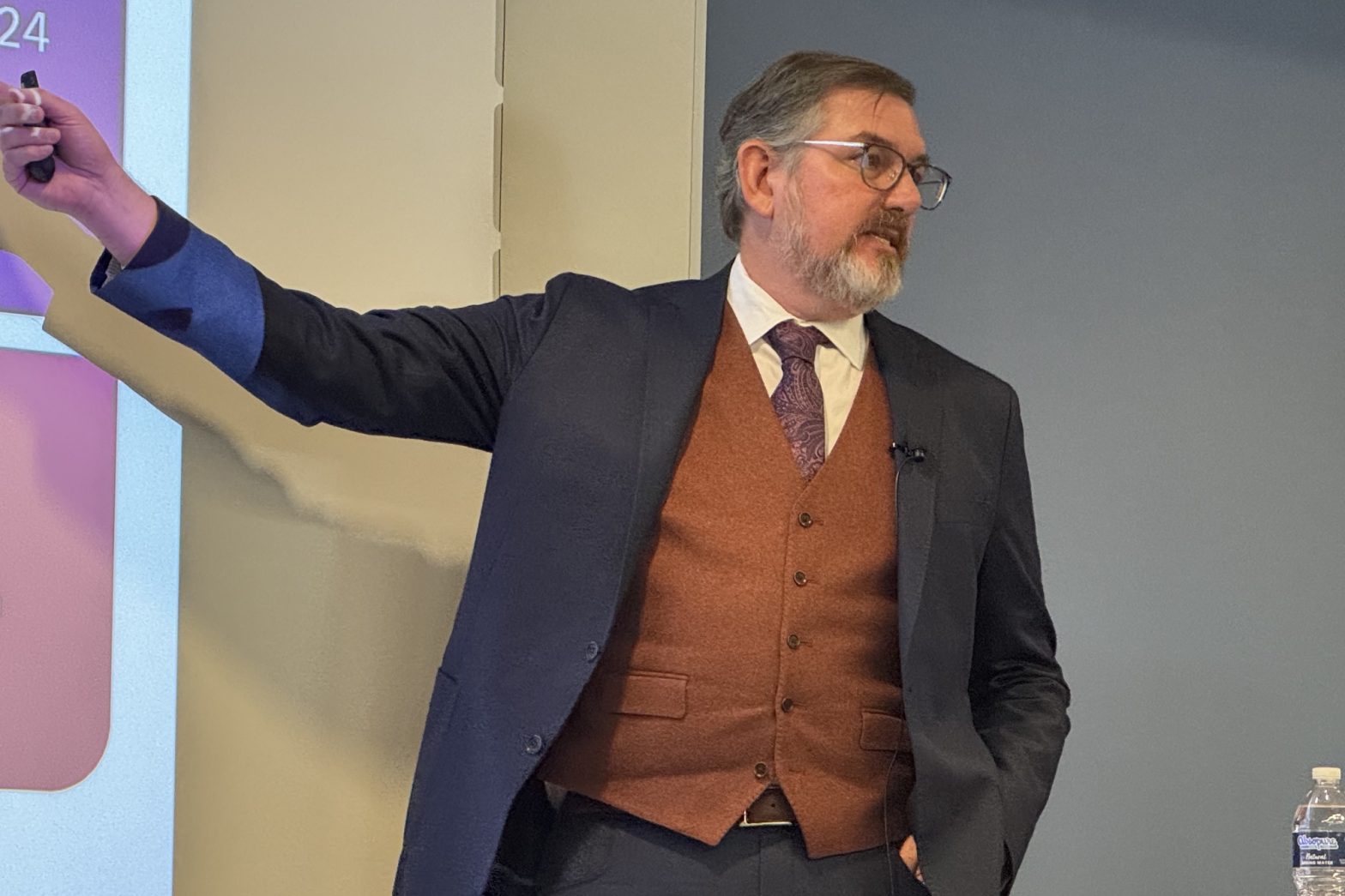
Nicholas Valentino, the Donald R. Kinder Collegiate Professor of Political Science and Research Professor in the Center for Political Studies at the University of Michigan, is among the 252 leaders chosen for the 2026 class of the American Academy of Arts and Sciences.
Nicholas Valentino currently serves as a PI of the American National Election Studies (ANES). He was President of the International Society for Political Psychology from 2019-2020 and has served on the American National Election Studies Board since 2010, becoming Associate PI in 2018.
Valentino specializes in political psychological approaches to understanding public opinion formation, socialization, information seeking, and electoral participation. His work employs experimental methods, surveys, and content analyses of political communication. The research has focused on the intersecting roles of racial attitudes and public emotions, especially the distinct power of anger versus fear. He has also written extensively on the causes and consequences of empathy for ethnic outgroups, the focus of his award-winning book with Cigdem Sirin and Jose Villalobos, Seeing Us in Them: Social Divisions and the Politics of Group Empathy (Cambridge University Press 2021, with Cigdem Sirin and Jose Villalobos).
Valentino has been previously recognized with the Rackham Distinguished Graduate Mentoring Award (University of Michigan, 2024), the Tronstein Award for Undergraduate Teaching in Political Science (University of Michigan, 2017), and the Erik H. Erikson Award for Early Career Research Achievement (International Society of Political Psychology, 2005).
Valentino is one of three scholars from the University of Michigan elected to the Academy this year, with Derek Peterson (History) and Rada Mihalcea (Computer Sciences).
The Academy, chartered in 1780, was established to recognize accomplished individuals and engage them in addressing the greatest challenges facing the young republic. The first members elected to the Academy include George Washington, who said – in his first annual message to Congress in 1790 – “Knowledge is in every country the surest basis of public happiness.”