In historical populations, female death rates usually exceeded male death rates during the reproductive ages. The most obvious cause of this difference is deaths resulting from childbirth. Parish registers show that maternal mortality in pre-industrial England (1650-1800) averaged 10 per 1,000 births – or 1.0 percent, 50 times higher than today. Childbearing dramatically increased the mortality of married women– but were they more likely to die than their husbands from other causes?
In a study just out in Population Studies, historical demographer George Alter applies a new method that sheds new light on the role of deaths following childbirth to explain sex differences in mortality, and on the conditions that caused high maternal mortality in pre-industrial England. The results highlight the extraordinary vulnerability of mothers in the weeks following a birth.
Alter had long been frustrated by the problem of how to understand sex differences in mortality without the effect of maternal mortality. If you took out the effect of deaths from childbirth, Alter wondered, would women’s mortality be higher or lower than men’s?
“I came up with a new way of measuring maternal mortality that is based on the survival curve,” said Alter, referring to the graph used by demographers to plot odds of survival that change over time. “If you look at men’s mortality rates following parenthood, their survival curve looks like a straight line. If you look at women, it drops precipitously in the first 40-60 days after childbirth before it becomes a straight line. That straight line, showing deaths not related to childbirth, is what I call ‘background mortality.’ And if you take that line and run it backwards to the origin, you get the proportion of women who died from maternal causes. So, I was able to come up with a way to measure maternal mortality, and to estimate female and male background mortality independently.”
The new method was applied to data from 26 rural parishes collected by the Cambridge Group for the History of Population and Social Structure that formed the empirical base for Wrigley, Davies, Oeppen and Schofield’s English Population History from Family Reconstitution (Cambridge, 1997), freely available from the UK Data Archive.
The results indicate that female mortality was higher than male mortality, even when deaths following childbirth were removed. Alter found that mothers had higher background mortality than fathers of the same age– with risks of death for mothers exceeding those of fathers by 10 percent or more. However, a mother’s risks of death after giving birth were 4 to 5 times higher than the risks of other married adults.
“The findings suggest that the dramatic rise and fall of maternal mortality between 1575 and 1750 was due to general epidemiological and economic conditions – rather than changes in childbirth and maternal care,” said Alter. “The prevalence of other diseases at the community and the household level amplified maternal mortality in the preindustrial period.”
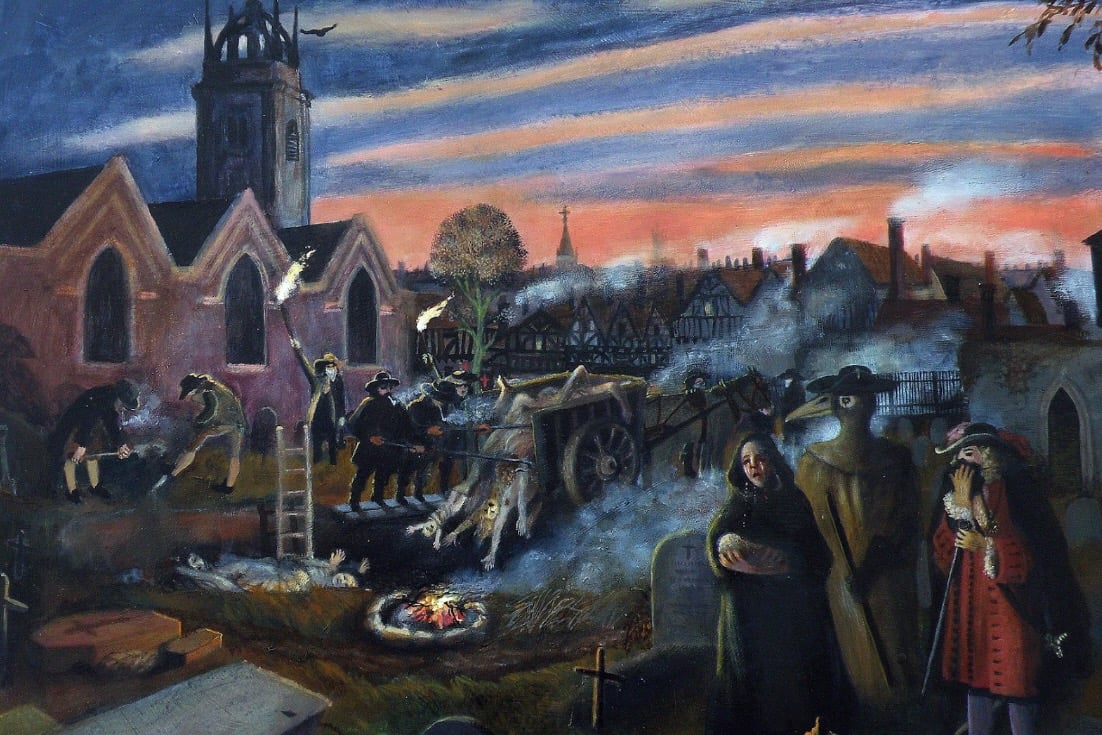
Epidemics had a very strong impact on new mothers. If burials in the surrounding county doubled or the most recent infant died, Alter found that the risk of death for both mothers and fathers doubled. But new mothers were so sensitive to infection that their risks could rise to 20 to 40 times the mortality of a father in normal times. More than a year after giving birth, mothers were still twice as likely as fathers to succumb to epidemic mortality.
Alter also found that deaths following childbirth responded to high food prices, pointing to the importance of maternal nutrition. Historians have noted that pregnant and breastfeeding women would have had increased needs for calories and specific nutrients, but mothers often denied themselves to feed their husbands and children. They would have been strongly impacted by interruptions in food supply due to harvest failures, war, and epidemics.
Midwifery began to change in the 18th century, setting the stage for the professionalization of the field in the 19th century. A wave of inventions such as the obstetrical forceps arose out of increased medical attention on childbirth, and by the end of the century, male physicians – who were more likely than female midwives to use interventions that could introduce infections– were asserting their expertise. Alter’s results call for a reevaluation of previous scholarship that attributed falling maternal mortality rates in the 18th century to improvements in obstetrical practices. The new findings suggest that shift probably had a minor role in reducing maternal mortality compared to improved nutrition and the reduced incidence of infectious disease.
George Alter is Research Professor Emeritus at ICPSR and the Population Studies Center at the Institute for Social Research and Professor of History, Emeritus, at the University of Michigan.
IMAGE CREDIT: Oil painting by history painter Rita Greer (2019), from Wikimedia, depicting London during the “Great Plague” of 1665. George Alter’s analysis of rural parishes show the extraordinary vulnerability of mothers in pre-industrial England to epidemics.
Contact: Tevah Platt